

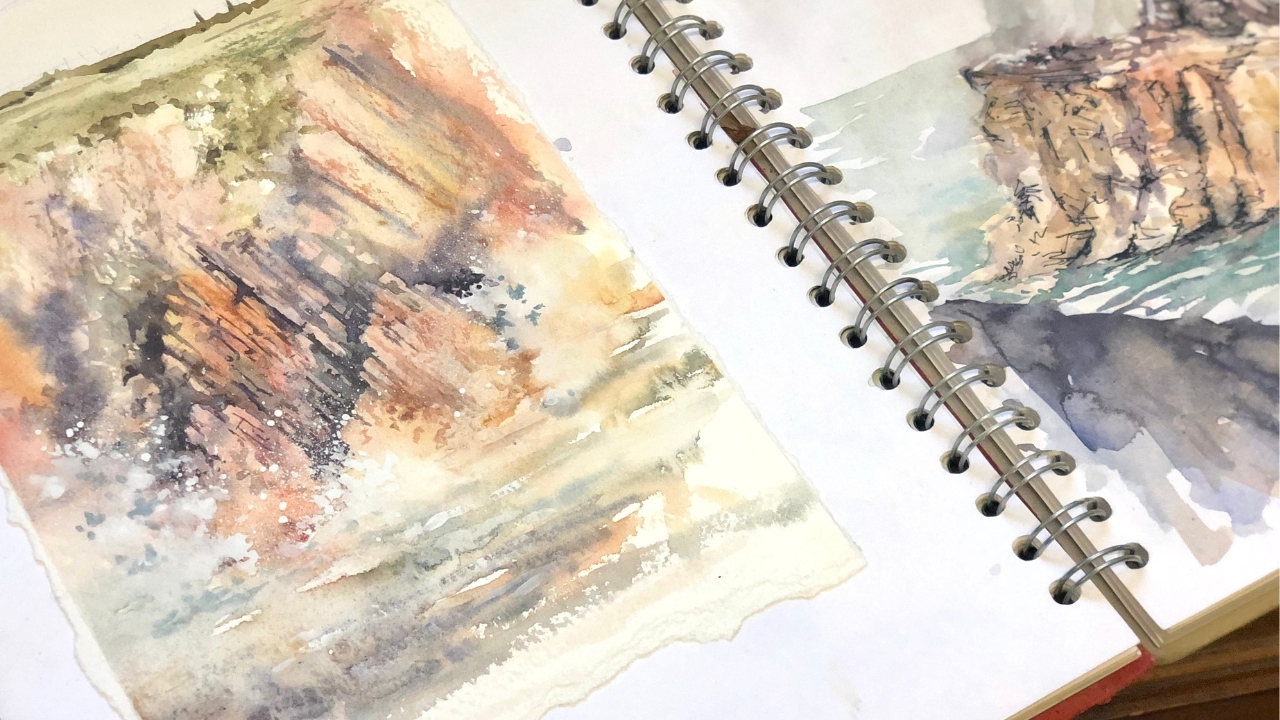
The Importance of Recording and Collecting Reference Material for Painting
Whether you’re a seasoned artist or just beginning your creative journey, one of the most powerful tools in your artistic practice is not a brush, it’s your reference material. Collecting and recording inspiration and visual cues before you begin a painting can not only spark new ideas but also provide guidance in areas like composition, tone, texture, and especially colour.
So how do you build a reference collection that truly works for you?
Building a Visual Library
Gathering reference material is like planting seeds for future creative growth. You never know when a postcard you picked up five years ago or a photo you took on holiday might inspire your next piece. Here are some tried and tested sources for reference material:
- Postcards – Great for iconic imagery, colour palettes, and compostion ideas.
- Magazine clippings – Great images, unexpected colour combinations, and interesting layouts or composition.
- Photographs – Whether taken with a DSLR or your phone, photos capture fleeting moments, lighting, and real-world textures.
- Colour swatches – These can come from paint stores, fabric samples, or your own mixing experiments. They’re invaluable for matching tones later on.
Don’t overlook physical organisation. Use box files or lever arch files with plastic sleeves to group your materials by theme, location, or project. You can also keep a scrapbook-style visual sketchbook where you can use collage, create rich mood boards and final ideas that feed directly into your painting practice.
Know Your Learning Style
How you collect and record reference material may depend heavily on how you process information. Are you a visual learner who needs to see colours and compositions to understand them? Then image-rich files and digital photo folders may be your best friend. Prefer to physically touch things? If you’re a kinesthetic learner, you might get more from cutting, gluing, and assembling tactile scrapbooks or handmade sketchbooks. Auditory learners might record themselves talking through ideas while browsing images or even take short voice notes on why a particular photo or image caught their eye.
Go Digital
Your smartphone is a mini studio in your pocket. Use it not just to capture images, but to organise them into albums or folders. For instance, you might create albums titled “Skies”, “Sea birds”, “Lighthouses”, or “Colour Inspiration”. You can also use apps like Pinterest to build digital mood boards that sync across various devices.
Sketchbooks: Storehouses of Ideas
Sketchbooks are essential to the artist’s process. Some artists prefer large, loose pages for expressive marks; others love the portability of a pocket sketchbook. Here’s a quick overview of some options:
- Hardback or ring bound sketchbooks – Durable and great for daily sketching or journaling ideas. These are commonly made up of cartridge paper.
- Watercolour sketchbooks – Designed for wet media, ideal if you experiment with paint while planning.
- Mixed media books – Suitable for both drawing, painting, pastel and collage.
But don’t be afraid to get creative and make your own sketchbook, this can be both economical and deeply personal. You can bind together leftover paper, experiment with different sizes and textures, or even create themed sketchbooks for specific trips or projects. The process itself is often meditative and a great warm-up to studio work.
A Practice Worth Investing In
Taking time to record, collect, and organise reference material might seem like extra effort, but it pays off in countless ways. It sharpens your eye, feeds your imagination, and gives you a personal archive to dip into when needed. Over time, you’ll begin to see patterns in what you collect, clues to your interests and stylistic tendencies.
So keep those postcards, snap that photo, swipe that colour swatch and keep your materials close-by. The best paintings often start long before the first brushstroke is made.
Happy painting – Ruth
Watch my latest video demonstration above to see this technique in action.
INTERESTED IN TAKING PART IN MY ONLINE PAINTING COURSE ABOUT PAINTING ROUGH SEAS? CLICK HERE
DOWNLOAD A FREE PDF ABOUT TRICKS AND TECHNIQUES IN WATERCOLOUR HERE.
DOWNLOAD A FREE PDF ABOUT THE COLOUR WHEEL AND COLOUR MIXING HERE.