
Understanding Watercolour Papers: Why they all behave differently
Choosing the right watercolour paper can make as much difference to your painting as the paints or brushes you use. Each paper has its own personality, from how it absorbs water to how it allows you to lift colour. Even papers that look similar at first glance can react completely differently once the paint hits the surface.
- The Surface: Rough, NOT, and Hot Pressed
Most watercolour papers come in three main surface types:
- Rough – has a pronounced texture that catches pigment beautifully, perfect for expressive, textural work and granulating colours.
- NOT (Cold Pressed) – a slightly smoother surface, often a favourite for its balance between detail and texture.
- Hot Pressed –smooth, ideal for fine detail, line work, or botanical painting.
But even within these categories, each brand and paper type can vary. One company’s “NOT” paper can feel almost smooth, while another’s might have quite a toothy grain.
- Paint Lifting and Staining
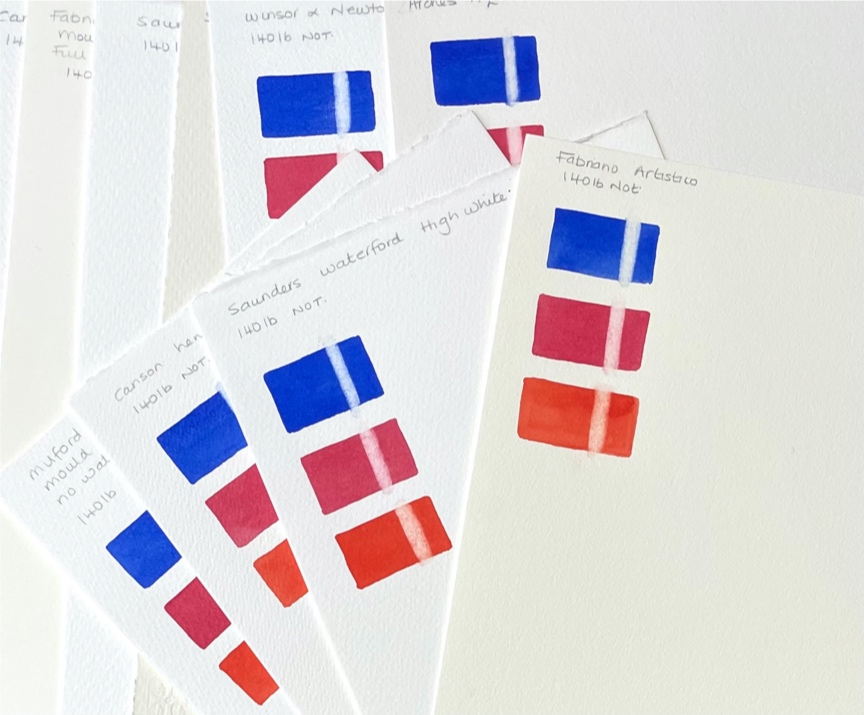
One of the biggest surprises for many artists is how differently paints can lift depending on the paper. Some papers allow you to blot or scrub away colour easily, while others hold onto pigment stubbornly.
This depends not only on the sizing (the substance added to control absorbency) but also on the paper’s fibre composition.
- Heavily sized papers tend to keep paint sitting on the surface longer — great if you like to lift, glaze, or make corrections.
- Softer, more absorbent papers allow washes to sink in, creating a lovely softness but less room for adjustment.
Even paints you know well can look or behave differently when you switch paper.
- Colour and Brightness
Watercolour papers aren’t all the same shade of white. Some are warm and creamy; others are bright and cool. This subtle difference can shift the entire tone of a painting.
For seascapes, a cool white can enhance the freshness of the water, while a warmer paper might give landscapes or portraits a gentle glow.
- Cotton vs. Cellulose
Artist-grade papers made from 100% cotton tend to offer the best control, durability, and even absorption. They can handle multiple washes and lifting without the surface breaking down.
Wood pulp (cellulose) papers are more affordable but can be less forgiving, colours may dull more quickly, and reworking may damage the surface.
- Testing and Knowing Your Paper
The best way to understand a paper is to test it. Try:
- Lifting a colour after it’s dry.
- Comparing how colours dry and blend.
You’ll soon find each paper has its own properties. Once you know how it behaves, you can work with it rather than against it, choosing the one that best matches your painting style.
In the End
Watercolour paper isn’t just a surface; it’s part of your medium. Taking the time to experiment can transform the way you paint, and help you discover those magical combinations of paper, pigment, and water that make watercolour so endlessly fascinating.
To download my free pdf all about tricks and techniques in watercolour, click here.
To download my free pdf all about colour mixing in watercolour, click here.