

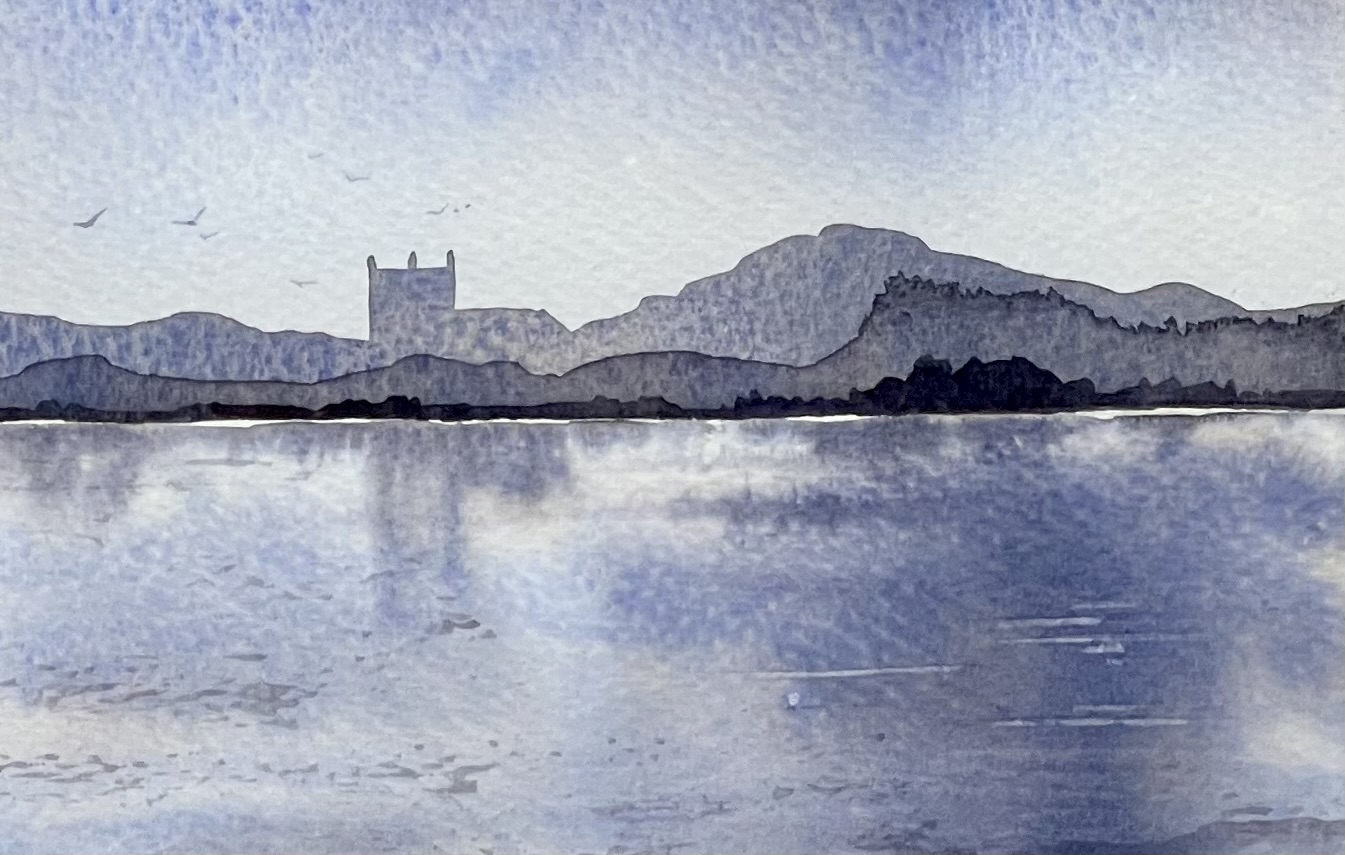
A Simple Two-Colour Watercolour Landscape for Building Confidence
This month’s video is a short, beginner-friendly demo showing how to create a peaceful watercolour landscape using only two colours. Limiting your palette is a brilliant way to strengthen your skills: it removes the stress of colour decisions and lets you concentrate on the techniques that truly matter.
In this project, we focus on four classic watercolour techniques:
wet in wet, wet on dry, dry brushing, and lifting out paint.
These are the foundational skills that watercolourists return to again and again. Even when you progress to more complex paintings, the techniques don’t change, only how you combine them. That’s why this simple landscape is an ideal confidence-builder.
Materials Used
To keep things straightforward and achievable, the materials list is short but carefully chosen:
- 140lb Bockingford watercolour paper
- Good quality synthetic round brushes in sizes 12, 6, 2, and a No.1 rigger
- Jam jar for water
- Flower palette with deep wells (perfect for mixing plenty of colour)
- Pencil and ruler for light guidelines
- A scrap piece of the same paper
Using the same type of paper for testing your mixes and consistency is essential. Every paper absorbs water and pigment differently, so your practice strokes should behave exactly like they will on your final piece.
Why Stretch Your Paper?
One step I always recommend, especially for beginners is stretching your watercolour paper. It may feel like an extra job, but it makes painting easier and improves the final artwork.
Stretching:
- Prevents the paper from cockling (buckling and warping)
- Keeps washes even and predictable
- Gives a more professional finish
- Creates a stable surface that won’t puddle unpredictably
If you’re unsure how to stretch paper, I have a clear demonstration on my YouTube channel:
👉 https://www.youtube.com/@RuthClaytonArtist
You’ll also find lots of other helpful watercolour tricks and techniques there.
The Techniques We Use:
- Wet in Wet
Soft skies, blended backgrounds, and gentle gradients all benefit from working on wet paper. It creates beautiful, natural transitions with very little effort.
- Wet on Dry
For the sharper edges and more defined shapes in the landscape, we apply paint to dry paper, giving us more control.
- Dry Brushing
This technique is wonderful for texture, grasses, tree bark, and subtle surface details that bring the scene to life.
- Lifting Out Paint
Light is just as important as colour in watercolour. Lifting removes pigment to reveal highlights or soften shapes, adding depth without overworking the painting.
Why This Demo Is Perfect for Beginners
By limiting the palette to just two colours, you get to focus fully on:
- Controlling water
- Understanding drying stages
- Learning how each technique behaves
- Seeing how much variety you can achieve with very little
It’s amazing how expressive and atmospheric a painting can be with such a simple setup.
If you’re starting out or returning to watercolour after a break, this project will help you gain confidence without feeling overwhelmed.
Have fun and Happy Painting!
To download my free pdf all about tricks and techniques in watercolour, click here.
To download my free pdf all about colour mixing in watercolour, click here.