

Over time, I’ve explored a range of techniques to capture the movement, sparkle, and mood of seascapes when using watercolour. Each one has its place, but I’ve learned that the real art lies not in using every trick you know, but in knowing when not to use them.
A painting overloaded with effects can quickly lose its harmony. The goal is always to let each technique quietly enhance your painting, not steal the show.
Wet-in-Wet Magic
This is often where the sea truly comes alive. By applying fresh colour into a wet wash, edges soften and hues merge beautifully, perfect for misty skies, rolling waves, or a distant horizon.
The Salt Effect
Sprinkling salt onto a still-damp wash creates delicate, crystalline textures, wonderful for foam or shimmering light on water. Timing is everything here: too wet, and the salt dissolves; too dry, and nothing happens.
Dropping in Clear Water
A few drops of clean water into a damp wash can create blooms and soft light effects, like sunlight breaking through a cloud or ripples on shallow water. It’s unpredictable, but that’s part of the charm.
Scratching Out
Once your painting is fully dry, using a craft knife to gently scratch out highlights can add sparkle to waves or glints on wet sand. A light touch is key, it’s easy to damage the paper too much.
Wet-on-Dry
Painting directly onto dry paper gives crisp, defined edges, ideal for rocks, boats, waves or foreground details. It contrasts beautifully with the softness of wet-in-wet areas.
Cling Film (Plastic Wrap)
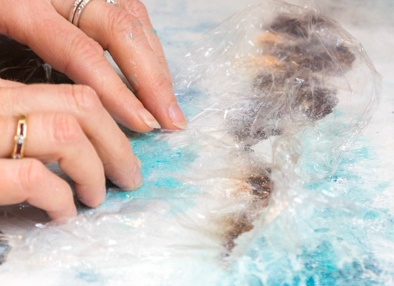
Laying cling film over a wet wash and leaving it to dry creates natural, fractured textures, perfect for abstract reflections or wave patterns. Peel it off slowly once the paint is completely dry to reveal unexpected beauty.
Lifting Out
Once the paint is dry, you can lift out lighter areas with a damp brush or sponge, if you’ve used non-staining colours. It’s a lovely way to retrieve lost light or form subtle waves.
Flicking with White Gouache
Using a toothbrush or flicking with a brush, a bit of white gouache can suggest spray, foam, or breaking waves. Use sparingly, a few flicks can be magical; too many, and it becomes distracting.
Dry Brushing
For texture on rocks or the sparkle of light on water, lightly dragging a nearly dry brush across rough paper creates broken, shimmering marks.
White Pastel Finishing Touches
A touch of white pastel at the very end can bring back highlights and add contrast. It’s best used where the eye needs a final glint of light.
A Final Thought
Every one of these techniques can add depth and life to your seascapes, but only when used with care. The best paintings breathe with confidence and simplicity. Techniques should serve the painting, not the other way around.
Have fun and Happy Painting!
To download my free pdf all about tricks and techniques in watercolour, click here.
To download my free pdf all about colour mixing in watercolour, click here.